KDArchitects Landscaping Archives: How to Read a Project Archive Before You Hire a Landscape Designer
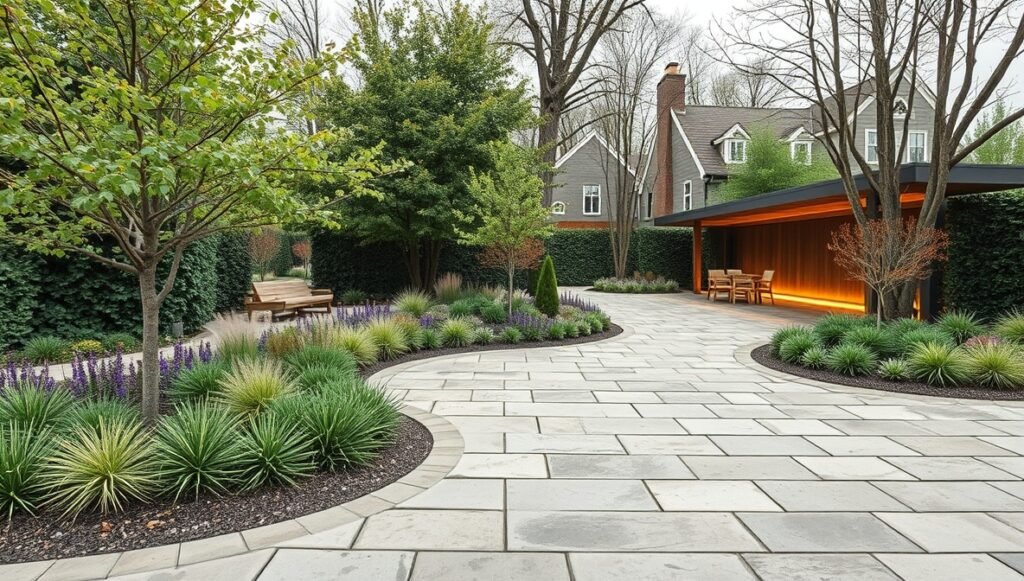
People who type kdarchitects landscaping archives into Google usually want one of two things: a look at past projects, or a way to judge whether the firm behind them can deliver what they have in mind. Search results for this phrase are thin. Most pages repeat words like “innovative” and “sustainable” without naming a single plant, material, or budget.
This guide does the opposite. It explains what a landscaping archive should contain, how to read one critically, what US homeowners should expect to pay, and which questions to ask before signing anything.
What a Landscaping Archive Is Supposed to Do
A project archive is a record of finished work. Done well, it answers four questions before a client has to ask them:
- What was built?
- Where was it built, and in what climate?
- What did it cost and how long did it take?
- Did it survive a few seasons?
A weak archive is a photo gallery with captions like “beautiful backyard retreat.” A strong one reads more like a case file. When you review kdarchitects landscaping archives, look for entries that name the site conditions, the design problem, the materials, and the outcome.
The gallery vs. the case study
| Feature | Photo gallery | Case-study archive |
|---|---|---|
| Captions | One line, mostly adjectives | Problem, solution, materials |
| Location | Missing or “USA” | City, state, and hardiness zone |
| Cost | Not mentioned | Range or final project size |
| Timeline | Not mentioned | Start to finish, in weeks |
| Plants | “Lush greenery” | Species names |
| Follow-up | None | Photos after one or two growing seasons |
If an archive looks like the left column, treat it as marketing. If it looks like the right column, you have something you can evaluate.
What Every Archive Entry Should Contain
Use this list as a scorecard. An entry that hits six or more of these items is worth your time.
- Site description: lot size, slope, sun exposure, soil type
- Client goal: entertaining space, privacy, drainage fix, low maintenance
- Design response: the layout decision and why it was made
- Hardscape materials: pavers, poured concrete, flagstone, gravel, timber
- Plant list: common and botanical names, with mature size
- Water strategy: irrigation type, drainage, rain capture
- Budget range: even a broad band is better than silence
- Timeline: design phase and construction phase separately
- Before and after images: from the same camera angle
- Maintenance notes: what the owner has to do each season
Many portfolios skip items 7, 8, and 10 because they invite hard questions. Those are the entries that tell you the most.
Reading the Archive by Project Type
Landscape work falls into repeatable categories. When you browse kdarchitects landscaping archives, sort what you see into these groups, then compare like with like. designmode24 interior design
Backyard patios and outdoor rooms
Check whether the patio relates to the house. Good designs line up door thresholds, match grade changes, and keep the seating area close to the kitchen. Ask whether shade is planned for afternoon use, since a patio facing west with no cover is unusable from July through September in much of the South and Southwest.
Front yards and curb appeal
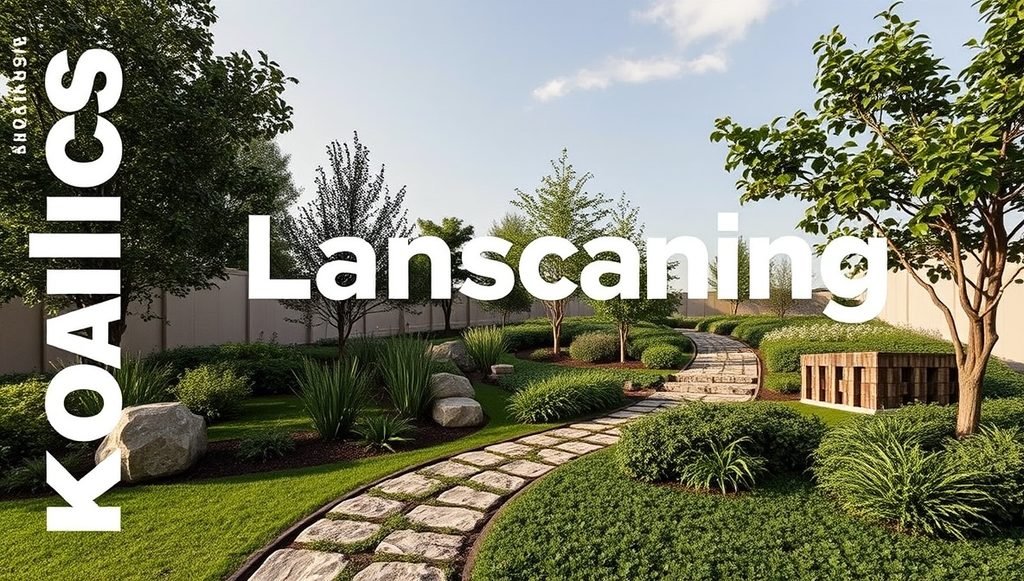
Front yard work is about circulation and scale. Look for a clear path from the street or driveway to the entry, planting beds sized to the house, and evergreen structure that holds up in winter. An archive entry that shows only summer photos hides how the yard looks for half the year.
Water features
Ponds, fountains, and rain gardens are different things. A decorative fountain adds sound and costs electricity. A rain garden is a planted basin that captures roof and driveway runoff, and it can solve a drainage problem. If an entry calls something a “water feature,” the archive should say which one and what it does.
Living walls and vertical planting
Living walls need irrigation, drainage behind the panel, and plants matched to light levels. They are high-maintenance. If you see one in the archive, look for notes on irrigation method and replacement schedule, because unmanaged green walls decline fast.
Pergolas, screens, and structures
Pergolas should show footing details and wood or metal specs in the notes. In snowy states, ask about load ratings. In coastal areas, ask about corrosion-resistant hardware.
Match the Design to Your US Climate Zone
A design that looks great in one archive photo may fail in your yard. The USDA Plant Hardiness Zone Map, which divides the country by average annual minimum winter temperature, is the baseline for plant choice. Enter your ZIP code on the USDA site to find yours.
| Region | Typical challenge | Plants and materials that often work |
|---|---|---|
| Southwest (zones 8-10) | Heat, low rainfall | Desert willow, agave, blue grama, decomposed granite |
| Pacific Northwest (zones 7-9) | Wet winters, moss, drainage | Rain gardens, ferns, native shrubs, permeable pavers |
| Southeast (zones 7-10) | Humidity, storms, pests | Live oak, muhly grass, crape myrtle, raised beds |
| Midwest (zones 4-6) | Cold winters, heavy clay | Purple coneflower, little bluestem, switchgrass |
| Northeast (zones 4-7) | Freeze-thaw, snow load | Serviceberry, hydrangea, frost-rated stone |
| Mountain West (zones 3-6) | Wind, short season, thin soil | Blue grama, penstemon, hardy perennials |
When reading kdarchitects landscaping archives, note where each project sits. A portfolio dominated by one region tells you where the team has proven experience. If you live elsewhere, ask how they adapt.
What Landscaping Costs in the US
Archives rarely list prices, so use these planning ranges as a sanity check. They are broad national estimates for installed work and vary a lot by city, access, and material choice. Treat them as starting points and get local quotes.
| Item | Approximate installed cost |
|---|---|
| Gravel patio | $3-$8 per sq ft |
| Poured concrete patio | $8-$18 per sq ft |
| Paver or natural stone patio | $15-$40 per sq ft |
| Sod lawn | $1.50-$3.50 per sq ft |
| Retaining wall | $25-$60 per sq ft of wall face |
| Residential irrigation system | $2,500-$6,500 |
| Pergola | $4,000-$15,000 |
| Small pond or fountain | $2,000-$8,000 |
| Landscape architect (hourly) | $75-$200 |
Design fees often run as a percentage of the construction budget or as a flat package, so ask which model applies. A project that looks inexpensive in a gallery photo may hide excavation, drainage, or permit costs that never show up in an image.
Where budgets usually go wrong
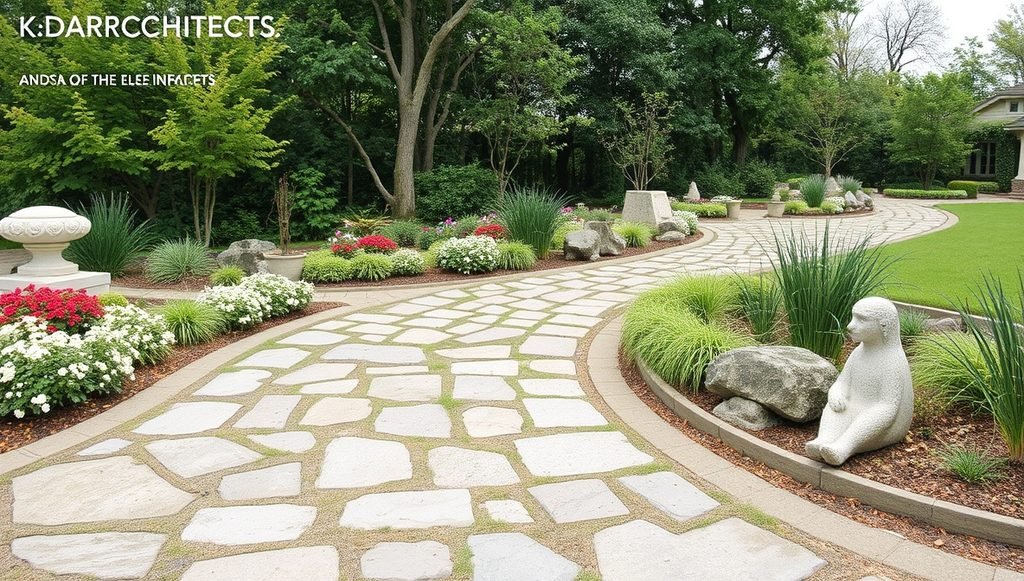
- Grading and drainage: moving soil and managing water is invisible work that can consume 10-20% of a budget.
- Hardscape base preparation: a patio with a poor compacted base will settle and crack within a few years.
- Plant sizing: installing 15-gallon trees instead of 3-gallon ones changes the cost sharply.
- Lighting and electrical: outdoor circuits and transformers are often left out of early estimates.
- Permits: many cities require them for retaining walls over a certain height, pergolas, and grading changes.
Sustainability Claims: What to Look For
Nearly every landscaping website claims sustainability. A useful archive backs it up with specifics. Here is how to tell the difference.
| Vague claim | Specific evidence |
|---|---|
| “Eco-friendly materials” | Permeable pavers, reclaimed stone, FSC-certified wood |
| “Water-wise design” | Drip irrigation, smart controllers, rain barrels, a lawn reduced by a stated percentage |
| “Native plants” | A plant list with species names and the share of the planting that is native |
| “Supports wildlife” | Pollinator plants, bird habitat, layered planting |
| “Low maintenance” | Estimated weekly or monthly hours, mulch depth, pruning schedule |
For water guidance, the EPA’s WaterSense program publishes tips on irrigation efficiency. Check any claim in kdarchitects landscaping archives against standards like these. If a sustainability statement has no numbers, tools, or species attached to it, discount it.
The Typical Project Process
Understanding the sequence helps you judge whether an archive entry shows a complete project or only the finished photos.
- Discovery call: goals, budget, and style preferences
- Site survey: measurements, grading, utilities, soil, and sun
- Concept design: a rough layout with zones for seating, planting, and circulation
- Detailed plans: materials, plant schedule, irrigation, lighting
- Permitting: city or HOA review if required
- Construction: demolition, grading, hardscape, planting, irrigation
- Handover: care instructions and warranty terms
- Follow-up: a check after the first growing season
Each stage should be visible somewhere in the firm’s materials. If kdarchitects landscaping archives show only step 6 in photographs, ask for documentation of the others.
Landscape Architect, Designer, or Contractor?
These roles overlap, but they are not the same.
- Landscape architect: licensed in most states, trained in grading, drainage, and site engineering, and able to stamp plans for permits.
- Landscape designer: focuses on layout and planting, often without a state license.
- Landscape contractor: builds what the plans specify and may or may not design.
If your project involves slopes, retaining walls, or drainage changes, a licensed landscape architect is the safer choice. Verify any license through your state board.
Red Flags in Any Portfolio
- Photos with no locations or dates
- Identical images reused across different pages or headings
- Testimonials with no full name, city, or project detail
- No mention of cost, size, or timeline anywhere
- Claims of “award-winning” work with no award named
- A founder biography with no education, license, or employment history you can verify
- Heavy keyword repetition and little actual content, a common sign of pages written for search engines instead of readers
That last point matters here. Many pages that rank for this topic recycle the same promises. Trust only what you can verify, whether you are reading a blog post or the entries inside kdarchitects landscaping archives.
Questions to Ask Before You Sign
Bring this list to your first meeting.
- Which three archive projects are closest to my budget and site conditions?
- Can I speak with a past client whose project is at least two years old?
- Who will be on site day to day, and who is responsible for changes?
- What does the warranty cover on plants, hardscape, and irrigation?
- How are change orders priced?
- What permits are required, and who files them?
- What is the maintenance plan for year one?
How to Use the Archive to Write Your Own Brief
Treat the archive as raw material for your own project brief rather than a catalog to copy.
- Save five entries you like and five you dislike.
- For each, write down what you respond to: the material, the layout, the planting mix, or the mood.
- Look for patterns. If you like four patios that all use warm gravel and bunch grasses, that is a design direction.
- Note your own constraints: budget, lot size, HOA rules, sun, and maintenance time.
- Hand the designer the brief rather than a stack of photos. It saves hours of revision.
Conclusion
An archive is only useful if it holds evidence. Photos show taste, but case details show competence: site conditions, plant lists, costs, timelines, and what the yard looks like after two winters. Before you commit, review the full set of kdarchitects landscaping archives, confirm the firm’s credentials directly, and compare what you find against the checklists above. Whoever you hire, your best protection is a written scope, a clear budget, and a plant list you can read.
Frequently Asked Questions
What are kdarchitects landscaping archives?
They are the collection of past landscape and design projects associated with the KDArchitects name. Confirm what is included by visiting the firm’s official website.
How do I know if a landscaping portfolio is trustworthy?
Look for named locations, species lists, cost ranges, and dated before-and-after photos. Vague praise with no specifics is a warning sign.
How much does a backyard landscape project cost in the US?
Small projects often start in the low thousands, while full redesigns with hardscape can reach tens of thousands. Local quotes are essential because labor and material prices vary by region.
Do I need a licensed landscape architect?
For grading, retaining walls, or drainage changes, yes. For simple planting plans, a designer may be enough.
What plants are best for low-maintenance landscaping?
Native plants suited to your USDA zone usually need less water and care. Examples include purple coneflower, little bluestem, and blue grama, depending on region.
How long does a typical landscaping project take?
Design usually takes two to six weeks, and construction takes a few weeks to a few months depending on scope and weather.
Can I use an archive to estimate my own budget?
Only roughly. Match entries by size, materials, and region, then ask the firm for a written estimate for your specific site.
[…] Most keywords describe one thing. This one doesn’t. The phrase is used as a brand name, a content category, and a loose label for “tech news with a friendly tone.” Writers fill that gap with whatever fits their site, and the pages below show it. kdarchitects landscaping archives […]